Understanding psoriasis
Psoriasis is a common, long-term immune condition. It is not contagious and it is nobody’s fault. With the right care and support, most people can keep it under control and live full lives.
Psoriasis in numbers
You are far from alone. Psoriasis is one of the most common chronic skin conditions in the world.
125M
people live with psoriasis worldwide
2–3%
of the population is affected
1 in 3
may develop psoriatic arthritis
0%
contagious: you cannot catch it
What is psoriasis?
In healthy skin, new cells grow and replace old ones over about a month. In psoriasis, an overactive immune system speeds this up to just a few days. Cells build up on the surface and form raised, inflamed patches called plaques, often covered with silvery or white scale.
Psoriasis usually comes and goes. Periods with many symptoms, called flares, can be followed by calmer periods. It can start at any age, but most often appears between 15 and 35. Genes play a role, and certain triggers can start a flare.
- It is an immune-mediated, chronic condition
- It is not contagious and not caused by poor hygiene
- It can affect skin, scalp, nails and joints
- Effective treatments are available
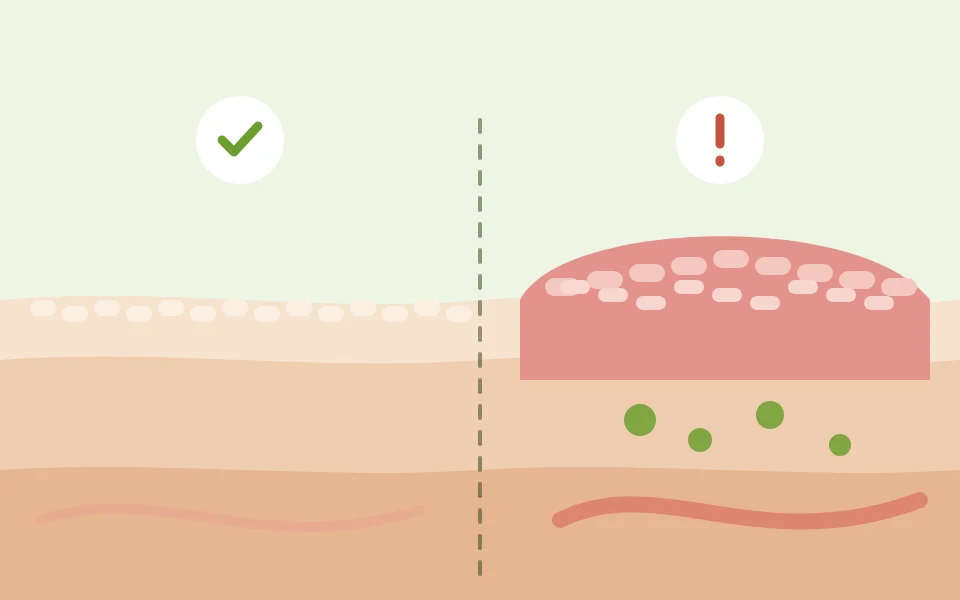
Left: healthy skin. Right: skin cells build up quickly in a psoriasis plaque.
Types of psoriasis
Psoriasis looks and feels different from person to person. These are the most common forms.
Plaque psoriasis
The most common type (about 8 in 10 people). Raised, red or darker patches with scale, often on elbows, knees, scalp and lower back.
Guttate psoriasis
Small, drop-shaped spots on the body and limbs. Often appears in children and young adults after a throat infection.
Inverse psoriasis
Smooth, inflamed patches in skin folds such as the armpits, groin and under the breasts. Worse with friction and sweat.
Pustular psoriasis
Blisters filled with non-infectious pus, on the hands and feet or more widely. Needs medical attention.
Erythrodermic psoriasis
A rare, severe form that inflames most of the skin. Seek urgent medical care if your skin suddenly becomes red all over.
Nail & psoriatic arthritis
Pitted or thickened nails, and painful, swollen joints. Tell your doctor about joint pain early.
Common symptoms
- Raised, inflamed patches with silvery or white scale
- Itching, burning or soreness
- Dry, cracked skin that may bleed
- Pitted, thickened or discoloured nails
- Stiff or swollen joints (psoriatic arthritis)
Common triggers
- Stress and lack of sleep
- Infections, such as strep throat
- Skin injuries: cuts, scratches, sunburn
- Cold, dry weather
- Smoking and heavy drinking
- Some medicines (talk to your doctor)
How psoriasis is treated
There is no cure yet, but treatment can clear or greatly reduce symptoms. Your dermatologist will help you find what works for you, often step by step.
Option 1
Topical treatments
Creams, ointments and shampoos with corticosteroids, vitamin D analogues or other active ingredients. Usually the first step for mild psoriasis.
Option 2
Phototherapy
Controlled exposure to ultraviolet light in a clinic, a few times a week. Helpful for larger areas of skin.
Option 3
Systemic medicines
Tablets or injections that work throughout the body, for moderate to severe psoriasis or psoriatic arthritis.
Option 4
Biologic therapies
Targeted medicines that calm specific parts of the immune system. Prescribed and monitored by specialists.
Living well with psoriasis
Small daily habits can make a real difference to your skin and how you feel.
Moisturise every day
Use a fragrance-free emollient, especially after bathing.
Keep baths short and lukewarm
Pat your skin dry and avoid harsh soaps.
Look after your mind
Stress can trigger flares. Talking helps: you are welcome in our groups.
Stop smoking, limit alcohol
Both are linked with more severe psoriasis.
Eat well and move
A healthy weight can improve symptoms and how treatment works.
Keep a flare diary
Notes about triggers help you and your doctor.
Questions about psoriasis
Is psoriasis contagious?
No. You cannot catch psoriasis from someone or pass it on by touch, swimming or sharing towels.
Can psoriasis be cured?
Not yet, but many treatments can clear the skin for long periods. Research is moving fast, especially for moderate and severe psoriasis.
Is it caused by diet or hygiene?
No. Psoriasis is an immune condition with a genetic background. Lifestyle factors can influence flares, but they do not cause the disease.
Can children get psoriasis?
Yes. Children and teenagers can develop psoriasis. We offer information and support for parents and young people.
When should I see a doctor?
See your doctor if you notice new patches, joint pain, nail changes or if treatment is not working. Seek urgent care if your skin becomes red all over or you feel unwell.
Important: this page offers general information and does not replace medical advice. Always talk to your doctor or dermatologist about your own situation. In an emergency, call 112.
Connect with others living with psoriasis
Join a friendly support group, near you or online. Sharing experiences is one of the most helpful things you can do.